John Alderman — Writer and Experience Strategist
Frame
Half-recognized intuitions don't become useful on their own. Someone has to help shape them into ideas that can hold together under pressure.
Artifact · 1998–2024
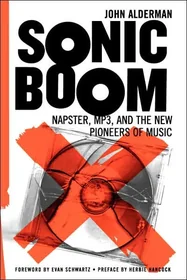
Sonic Boom
An account of how an entrenched industry tried to stop a transition it didn't yet have the vocabulary to describe. Foreword by Herbie Hancock. New York Times Notable Book; New York Times Best Books Since 2000.
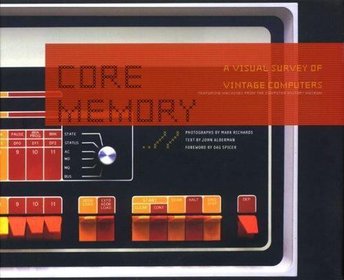
Core Memory
Fifty machines from the Computer History Museum, photographed by Mark Richards, treated as designed objects and evidence of use rather than obsolete equipment. Foreword by Dag Spicer. Design Observer Book of the Year.
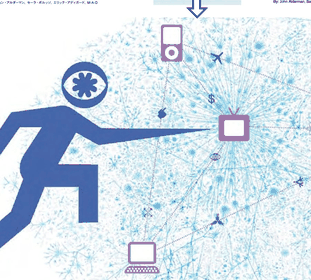
Exploding TV
A framework naming nine properties of how video would reorganize once distribution stopped being scarce. Written a year before the iPhone's release. Co-authored with Erik Adigard and Sarah Borruso.
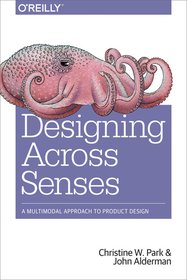
Designing Across Senses
Multimodal frameworks and working methods for designing interactions that move across screens, surfaces, environments, and embodied experience. Co-authored with Christine W. Park.
Dix Réflexions sur l'Interface Graphique
Ten short essays on the graphical interface as it became the operating environment of modern life, written for the French design press. With Erik Adigard.

Dieter Rams: Making Systems and Making Sense
A critical review of the Rams retrospective at SFMOMA, reframing him as a systems designer as much as a functionalist.
Future Signals
At a time when the dystopic seems to be the only available mode, a broader tool and practice for imagining change and how it happens.
Signal · ongoing
We seem to be living with more kinds of intelligence each day. Which ones matter, and for what?
Attention has qualities. Which ones matter? Which hold possibility? Which are under threat?
When do we need to demonstrate good intentions before we assume them?
Something psychedelic has entered the atmosphere. Has it become inescapable?
Imagination is a thinking discipline. Why is it too often left out?
Design solves for efficiency. Art solves for effectiveness. Why do most organizations hire for the first when they desperately need the second?
How do we create conditions under which the best thinking can happen?